Once more unto the breach …

  • thoughts on genre

    Genre found its way into the English language in the late 18th century from “middle French.” The French got it from Latin – the “gen-” part tends to refer to “grouping”/category – e.g. “genus” in biology is closely related.

    random thought: gender is also “closely related” but “genesis” was derived from the Greek “gignesthal” with a “to be born” meaning – implying beginnings/origins –

    Classification systems tend to tell us more about the folks doing the “classifying” than on the things being classified.

    A couple of ancient Greek guys liked to argue about the nature of “things” – and without fun stuff like “DNA testing” it can be hard to determine how closely different critters are related.

    “To be is to do” — Socrates.
    “To do is to be” — Aristotle
    “Do be do be do” — Frank Sinatra.”

    (famous graffiti)

    The pull-quote is PROBABLY a famous “misquote” — Socrates asked a lot of questions and his student Plato started a school where Aristotle did a lot of “observing” and classifying.

    If you go back a couple thousand years an expedient way to classify critters would be by what they eat and observable physical traits: e.g. does it have hoofs? are they split? does it eat grass? does it chew the cud?

    SO ol’ Mr Aristotle probably didn’t say “to do is to be” but he said something like “tell me what is does and I’ll tell you what it is” – which is obviously different than “tell me what it is and I’ll tell you what it does” — oh, and Mr Sinatra was singing about “Strangers in the night

    She blinded me with …

    meanwhile the fine folks at Merriam-Webster tell me that the Latin scientia (“knowledge, awareness, understanding, branch of knowledge, learning,”) is the root of the English word “science” – which first appeared in the 14th Century.

    “Science” in modern usage tends to imply a systematized body of knowledge gathered using the “scientific method.” The word “scientist” didn’t pop up until 1834 — a new word was needed for classification. e.g. Ben Franklin would have been called a “natural philosopher.”

    Of course the “natural philosopher” was by definition “God” centered. For what it is worth – it is possible to have “religion” without “science” but that doesn’t mean that “science” and “religion” are at odds with each other.

    Is “science” a “religion?” Umm, yes – but you will probably upset your biology professor if you bring up the subject – and we are moving on …

    Science Fiction

    Ok, my mind went down this rabbit hole when someone tried to suggest that Lucien’s “A True Story” was the first science fiction (“SF”) story.

    Now, I should say that I don’t feel strongly enough about the question to get into a fight about it – but you kinda need “science” before you can have “science fiction”

    The problem is one of “classification” — i.e. is the work “fiction?” yes. does it involve “science?” no.

    Of course that would also mean that some VERY popular “space based” franchises are not “science fiction” either.

    e.g. “Star Wars” is more accurately labelled “space fantasy” than “science fiction.” George Lucas made a movie titled THX-1138 in 1971 that is closer to “science fiction” but if I’m being REALLY pedantic it is a “futuristic dystopia”

    Yeah, the term “science fiction” lost any real meaning a long time ago – but some famous stories NOT thought of as science fiction could fit my definition (again “science” has to be part of the story) – e.g. Mary Shelley’s “Frankenstein” has “electricity” at its core – if you take away the “electricity”/science portion the story doesn’t happen

    While Star Wars (Episode IV) is about a young farm boy going on an adventure to save a princess and becoming a hero along the way — you could take out the “hyperspace travel” and “space dog-fighting” and you have a somewhat traditional adventure story.

    Again, if I’m being pedantic – “space based” combat wouldn’t look anything like what they do in the “Star Wars” franchise – i.e. you kinda need an atmosphere to do the quick turning acrobatic moves. The Death Star showing up in orbit around an “earth like” planet would cause disaster on the surface – just from being in orbit.

    I’m a fan of “Star Wars” and if you passionately want it to be “science fiction” that is just fine with me. I think it is a great movie – just not “technically” science fiction.

    Sub-Genres

    But “science fiction” can cover a wide range of subjects. Stanley Kubrick’s “2001: A Space Odyssey” (1968) fits my definition – so do “The Time Machine” (1960) and “The Matrix” (1999) –

    The Planet of the Apes” (1968) checks off the “science fiction” boxes and so did the “reboot” of the franchise – and notice that the 21st Century “reboot” didn’t have “space ships” or “time travel.”

    The point being that science fiction has a lot of “sub genres.” Just for fun we could classify those sub-genre’s on a scale of “hardness” e.g. maybe “Star Trek” is “medium hardness” and “Doctor Who” is “softer” and the “Three Body Problem” is “harder”

    There tends to be a healthy dose of “speculation” involved in science FICTION – so spending too much time explaining the “speculative science” is a good way to convince me to go somewhere else 😉

    Science Fiction without the “science” …

    SO what are we left with it you take the “science” out of “science fiction” — well, yeah obviously the “fiction” remains but “story taking a long time ago in a place far, far away” is a recipe for “fantasy.”

    I’m probably poking another VERY LARGE mammal if I point out that the “X-Men” franchise is “fantasy” trying very hard to be pretend “science.” Seriously “they were just born with super human powers” is a great way to avoid having to come up with “origin” stories for a wide range of fantastic characters – but it isn’t “science fiction.”

    Of course the “superhero” sub-genre could fit under either fantasy or SF – “The Incredible Hulk” and “The Fantastic Four” are “SF-ish” – but CLASSIC “Superman” not so much (e.g. he is from “outer space” and magically gets his powers from the sun and can fly because … I’m not really sure …).

    Once again, I enjoy “X-Men” and “Superman” – i just don’t consider them “science fiction.”

  • Gifs, dial-up, and Libraries

    I went down the rabbit hole this morning on how to pronounce “gif”

    We always “recognize” more words than we actively use – and if you “learn” a word by reading, then the “correct” pronunciation might seem odd

    English/”American” is particularly bad – because we readily absorb words from other languages. e.g. is the “e” at the end of “cache” silent? (yes, yes it is – even in the original French I’m told the “e” is silent most of the time – but it is French so I have no idea 😉 )

    GIF

    SO there is a techie dispute of how to PROPERLY pronounce the acronym for “graphics interchange format” – is it “hard g” Gif or is it like the peanut butter “jif” – I never had to say “gif” out loud and “back in the era of dial up services” folks didn’t talk about “file extensions” on a regular basis — I’m guessing MY experience isn’t unusual, e.g. the dispute popped up this morning …

    fwiw: the OED suggests “Gif” while Merriam-Webster (in true American style) offers both pronunciations as acceptable (gif) — so if you feel strongly about it one way or the other, you are correct 😉

    I tended to just say the letters g-i-f or maybe “dot g-i-f” if I needed to distinguish the file extension.

    fwiw: back in the ol’ “Disk Operating System” (D.O.S.) days we were limited to file names with a maximum of 8 characters a period and then a 3 letter extension e.g. “something.txt”

    D.O.S. used the file extension to distinguish between “executable files” and “data files” – if the file was “something.bat” then D.O.S. would try to execute/run the file while “something.txt” would be seen as “text data.”

    “Modern” operating systems still tend to look at the file extension as a clue for the file’s purpose. The file extension can be connected with an application – e.g. a “something.xcf” file was probably created in GIMP, if you double click on the file your OS will probably try to open the file with GIMP …

    yeah, we had to use cryptic file names because of those limitations back in the day, but we LIKED it that way! and stay off my lawn you crazy kids!

    If memory serves – I think D.O.S. 5.0 expanded the “before the dot” file name space. “Modern” operating systems allow for longer file names, but you can still be as cryptic as you like …

    Dial-Up


    Before the “internet” became widely available there were various “information services” available over dial-up connections. CompuServe immediately comes to mind (they get credit for “creating” the .gif format). There were multiple large “national services” as well as “bulletin board services” (BBS) “before the interweb”.

    “Dial-up” used a “modem” with speeds measured in “bits per second” – with 56k being a “fast” dial-up modem. Which translates to “slow” and “point to point.” Any large file downloads tended to be “hit or miss” because the connection being broken would (probably) mean you needed to start the download from the beginning.

    This “slow and risky” file download aspect of dial-up was why a lot of Linux distributions sold CD’s/physical media early on – i.e. it might have taken DAYS to download an entire distribution over dial-up … good times 😉

    “Modem” is short for “modulator”/”demodulator” – e.g. the sending computer starts with a digital signal that gets “modulated” to an analog wave that could be sent over the “plain old telephone system” (POTS) by the “modem.” The receiving computer’s modem then “demodulated” the analog signal to a digital signal.

    While I’m at it – if you go searching for ancient computer gear you might also come across “baud rates” – which measures the number of “state changes” in a signal. The “baud rate” might be slower than the “bit rate” due to data compression.

    Ummm, of course none of that is REALLY important in the 21st Century. BUT I like to point out that in the “big picture” telegraph technology (dots and dashes sent as electrical signals over a wire) was the same way “dial-up” worked – and “modern networking” is still sending 1’s and 0’s. Yes, “modern networking” is much faster and reliable, but still just 1’s and 0’s …

    The term “modem” has stuck around as a generic form of “computer communication device” – technically you PROBABLY have a “router” connecting you to the internet – but if you call it a “modem” no one will notice …

    Those “dial-up services” back in the day used to charge per minute – so access was obviously restricted/limited. In the late 1980’s part of a librarian’s job description might have included doing “research” using various dial-up services — e.g. those “card catalog” systems were functionally “analog databases” and the “electronic resources” of the time were not much more sophisticated

    “Google will bring you back, you know, a hundred thousand answers. A librarian will bring you back the right one.”

    -Neil Gaman

    Neil Gaman’s quote illustrates the importance of “context” and the evaluation of “sources”

    I’m seeing a lot of “AI” and “machine learning” (ML) as buzzwords in job postings – and folks predicting a “global golden age” because “insert buzzword here” will transform society on a grand scale – and well, the lesson from history is that “access to information” is NEVER equals “wise application of knowledge”

    I’m not saying that “buzzword” won’t change the workplace – I’m just pointing out that humanity is great at justifying doing the “wrong” thing – i.e. greedy, self-centered, arrogant humans are not likely to create “supremely benevolent and wise AI”

    but yes, AI and ML are (probably) gonna be important TOOLS but we (as in “humanity in general”) are PROBABLY not gonna use those tools to usher in a “golden era” of universal peace and prosperity for EVERYONE

    Libraries

    The “value” of libraries has always come from “information access.” When “books” where expensive and ONLY available in “dead tree” format then “library” was synonymous with “books.”

    “Physical media” still dominated “library holdings” until the late 20th/early 21st Centuries gave us “low cost digital access to information.”

    The value of libraries is STILL “information access” with the caveat that “information curation” is PART of “access.”

    i.e. Including something in a “library” implies that the item has more value than items NOT included in the “library.”

    Obviously just because someone “wrote a book” does NOT mean that the book is “true.” Back in the days of “dead tree book domination” the fact that someone had gone to the expense of PUBLISHING a book implied that SOMEONE thought the book was valuable.

    This is the same idea as the “why” behind “ancient works” being considered “worthy of study” (at least in part) just because they are “ancient” — i.e. the logic being that if someone put the time and effort into making a copy of “work” then it MUST have been highly regarded at the time. Then if there are multiple copies of “work” that logic gets amplified.

    Which again loops back to the importance of “curation” – especially in a time when the barriers to “getting published” are close to nil.

    “Man’s mind, stretched to a new idea, never goes back to its original dimension.”

     – Oliver Wendell Holmes

    Of course special care needs to be taken for the care and feeding of “young minds.” Curation to community standards is NOT the same as “censorship.”

  • random thoughts on “Acres of Diamonds”

    Russel Conwell (February 15, 1843 – December 6, 1925) (from wikipedia) “was an American Baptist minister, orator, philanthropist, author, lawyer, and writer. He is best remembered as the founder and first president of Temple University in Philadelphia, as the Pastor of The Baptist Temple, and for his inspirational lecture, ‘Acres of Diamonds’.”

    A link to the full text of Mr. Conwell’s speech is available on the Temple University page

    The story given as inspiration for the lecture (and as the introduction to the longer lecture) is available here

    100 years ago …

    Mr. Conwell would give the speech 6,000+ times – which is impressive. The “legend” is that when arrived in a new town (where he was going to perform the speech) that he would find out the “prominent”/successful folks in the town and work them into the performance.

    ONE of the “points” of the speech being that “opportunity” can be found everywhere. The entrepreneur doesn’t (automatically) need to travel far away looking for opportunity, it (might) be in the backyard.

    A hundred years ago, Mr. Conwell had to argue that “making money” was a worthwhile endeavor. The “common wisdom” of the day being that “extreme wealth” MUST have been achieved by some form of skullduggery.

    Historically, the human “founders” of these United States had come from a culture where land equaled “wealth.” In the “old world” land was in short supply AND passed down by inheritance. Someone born a “peasant” was going to stay a “peasant” because those “to the manor born” controlled the vast majority of land – and therefore “wealth.”

    A rising “merchant class” was in the process of disrupting things when the American Colonies and the U.K. had a disagreement in the late 18th Century — BUT most folks still lived/worked on farms until the early 20th Century.

    It is unfair to call ALL of those born into privilege “parasites.” However, 18th Century England is a good case study of “those in power” using the system to keep themselves in power AND wealthy.

    The grand point being that “money”/wealth is not evil. Money is a tool which can be used for good purposes OR for bad/”greed.” 1 Timothy 6:10 tell us that “LOVE of money is the root of all evil.”

    “For the love of money is the root of all evil: which while some coveted after, they have erred from the faith, and pierced themselves through with many sorrows.”

    1 Timothy 6:10

    Note that “greed” is never “good.” Greed implies “getting more” at the expense of others – which is obviously impossible to reconcile with “loving your neighbor as yourself.”

    New World

    It is fun to point out that “technology” has always been a disruptive force. Technology is always about “application” of knowledge. Advances in “farming technology” helped farmers be more productive – while also freeing up “labor” for the factories of the industrial revolution.

    If we could do a survey asking “average farm workers” (back when Mr. Conwell was giving his speech) how they could get “wealthy” they PROBABLY would have said some variation of “striking gold.”

    (… and historians can point at the “gold rushes” in the middle of the 19th Century as helping populate the western United States. Of course more “wealth” was generated from folks helping the “prospectors” than from folks “striking it rich” pulling gold/silver out of the ground …)

    Of course if one of those “average farm workers” that sold everything to go gold prospecting had created a “better plow” they would have been much better off.

    e.g. A Vermont born blacksmith solved a common problem for farmers – and both he AND the farmers prospered. John Deere, Inc is still helping farmers be productive in the 21st Century.

    Transportation

    If you look at the “super wealthy” from the late 19th and early 20th Century, the common theme might be “transportation.”

    e.g. Cornelius Vanderbuilt built an empire from ferries – from the time when “waterways” were the primary means of transportation in the U.S.

    John Rockefeller built an oil empire – from the time when oil was used for light and heat. When Henry Ford made the horseless carriage affordable, “oil” being refined into gasoline made the Rockefeller clan even more wealthy.

    Sandwiched between Mr. Rockefeller and Mr. Ford as “wealthiest American” was Andrew Carnegie – who had worked his way up from “child labor” to “steel magnate” – from a time with “railroads” and the telegraph were the latest and greatest “technology.”

    No, I am NOT holding up ANY of these men as “moral exemplars” – the grand point is that they helped “solve problems” for a large number of folks, and solving those problems was the root of their wealth …

    The musical “Oklahoma!” (1943) has a song where “rural residents” marvel at the advancements of Kansas City (“She went about as fur as she could go!”). By the mid 20th Century things like automobiles and the telephone system were commonplace enough to be a plot point in a musical.

    (“Oklahoma!” is set around the time the territory became a State. Oklahoma was the 46th State admitted to the Union in 1907)

    Again, the grand point being that some folks got wealthy from disrupting the status quo, and MANY more got wealthy by making incremental advances to cars and phones.

    e.g. Thomas Edison’s “diamonds in the backyard” looked like improvements to the telegraph system of his time long before “Edison Electric.”

    random thought – I’m sure there is an interesting story with the “cigarette lighter” technology. The actual “cigarette lighter” part isn’t a “standard feature” but you can find a lot of “accessories” that use the “automobile auxiliary power outlet.”

    Modern Times

    The sad fact is that in a LOT of nations the “economic game” IS stacked against the “average individual.” Which is why we see so many folks willing to risk everything to immigrate to “opportunity.”

    Obviously a complex subject – and someone living in a “warzone” is more concerned with survival than anything.

    For those NOT living in a warzone or an extremely dysfunctional government the big question becomes which “career path” to pursue.

    Charlie Chaplin made a movie called “Modern Times” back in 1936. Mr. Chaplin was a world famous “movie star” at the time – the movie sometimes get held up as an example of “radical political beliefs.” I’m not sure the movie has any agenda except “entertainment” – e.g. Mr Chaplin’s “tramp” character is pursuing “happiness” NOT a political agenda.

    That same idea applies to “modern workers” in the 21st century. “Happiness” probably won’t come from a “job.” Generic advice like “follow your bliss” is nice, but not particularly useful.

    There is nothing wrong with “working for a paycheck.” The best case scenario is to “do what you love” for a living. the WORST case scenario is doing a job you hate to survive …

    Education, intelligence, and “degrees”

    “Education in the United States” has changed a great deal in the last 100 years. The first “colleges” in the North America existed to train “clergy” (e.g. Harvard was founded in 1636) and then “academics.”

    The “Agricultural and Mechanical Colleges” came along later with the “land grant” colleges in the late 19th Century. The GI Bill sent 2.2 million WWII veterans to college AND 5.6 million more to other training programs.

    Sputnick I (1957) had the unintended consequence of changing national educational priorities in the U.S. – as well as kickstarting NASA (founded July 29, 1958). Both events helped the U.S. get to the moon 11 years later.

    World war and cold war politics aside, the 20th Century workplace was probably the historical “anomaly.” At one point in the 20th Century a “young worker” could drop out of high school, go to work at the local “factory,” and make a “good living,”

    Remember that for MOST of human history, folks lived and worked on farms. Cities provided a marketplace for those agricultural products as well as “other” commerce. Before mass media and rapid transportation MOST people would live and die within 20 miles of where they were born.

    Again, maybe interesting BUT I’ll point out that “compulsory” public education PROBABLY doesn’t have a great record of achievement in the U.S. (or anywhere). i.e. if the ONLY reason “student” is in “school” is because they “have to” – then that student isn’t going to learn much.

    This has nothing to do with “intelligence” and everything to do with “individual interests” and ability. “Education” is best understood as a live long process – not a short term goal.

    “I have never let my schooling interfere with my education.”

    — Mark Twain

    Part of what makes us “human” is (probably) the desire for “mastery” of skills. In the “best case” this is how “education” should look – a journey from “untrained” to “skilled.”

    If an individual’s investment (in time and money) results in them having a valuable “skill set” – then they are “well educated.”

    The contrast being the “academic” that has a lot of “degrees” but no actual “skills” — i.e. having a “doctorate” doesn’t automatically mean anything. “Having” a degree shows “completion” of a set of requirements not “mastery” of those subjects.

    Of course that distinction is why we have “licensing” as well as “degree” requirements for some professions. e.g. The law school graduate that can’t pass the “Bar examination” won’t be allowed to practice law, but might be allowed to teach.

    Nepo babies

    Now, imagine we did a survey of “modern high school students” in the United States asking them “how can you become wealthy?”

    It would be interesting to actually perform the study – i.e. I’m just guessing here from MY personal experience.

    We would also have collect data on the parent’s education and career — i.e. if a child grows up in a family of “fire fighters” then they are (probably) more likely to pursue a career as “fire fighters” simply because that is what they are familiar.

    The term “nepo baby” gets used (derisively) for some entertainment industry professionals – but if mom and dad are both “entertainment industry professionals” then a child pursuing an acting/performance career kind of becomes “going into the family business.”

    Now, “having good genetics” (you know “being ridiculously good looking”) is always a positive – so there are certainly “nepo babies” out there.

    I’m not throwing stones at anyone, “hiring” is not an exact science in ANY industry. That “genetic component” probably applies to families of doctors, lawyers, and educators as well — i.e. if mom and dad were both “whatever”, it is possible that “junior” will have those same skills/personality preferences.

    … and it is also possible that “junior” will want to do something completely different.

    BUT if “student” has minimal exposure to “work life” outside of what they see at home and school – MY GUESS is that the majority (of my hypothetical survey of high school students) will say the “path to wealth” involves professional sports or “entertainment industry.”

    umm, both of which may be more likely than “winning the lottery” or speculating on the stock market — but not exactly “career counsellor” advice

    (… oh, and you only hear about the “big rock stars” being told by their “career counsellor” that they couldn’t make a living as a “rock star” AFTER they became “big rock stars” – if someone quits after being told they “can’t do it” or that the chance of success is small, then they PROBABLY didn’t want to do “it” very much …)

    “Keep your feet on the ground and keep reaching for the stars.”

    – Casey Kasem

    Did I have a point?

    “Well, the “message” in “Acres of Diamonds” is still valid 100+ years later.

    A certain amount of “knowledge” is required to be able to recognize opportunity. e.g. The person to “build a better mousetrap” is someone that has experience catching mice.

    BUT simply inventing a “better” mousetrap is only half of the problem – the mousetrap needs to be produced, marketed, and sold.

    Two BIG things that weren’t around when Mr. Conwell was giving his speech are “venture capital” and “franchising.” Neither of which “negatively” impacts the argument he was making – and if anything make his argument even stronger …

    check out https://curious.iterudio.com for a short (free) class on “success”

    You might also find this book interesting

  • life, humor, Star Wars

    It bothers me a little when a “random comedian” comes out and describes their “theory of humor” as being “pain.”

    Usually it is an “established” entertainer – and they present the idea that “all humor is based on pain” as being a form of received wisdom.

    Obviously anytime the word “all” creeps into the discussion the chances of the statement in question being 100% correct is small.

    Along the same path – someone recently tried to argue that “Star Wars” was “woke” from day 1 – and, well, my response is dotted line connected to the above …

    Life

    The idea of “stress” as a negative force in daily life has been around for years. Someone in a “big business marketing department” came up with a slogan about “reducing stress” as a way to sell soap/soup/something else – but “stress” is not inherently positive or negative.

    The human body has a generic “stress response” but our perception of “stress” is relative. The “positive” form of stress (eustress) gets a lot less attention than the “negative” form of stress (distress).

    “Become a possibilitarian. No matter how dark things seem to be or actually are, raise your sights and see possibilities — always see them, for they’re always there.”

    Norman Vincent Peale

    Obviously folks WANT eustress – but that tends to get marketed as “fun” or “happiness.”

    It becomes a truism that the only thing we can truly “control” is out attitude towards “stress.” “Life” is gonna happen, all we can really control is how we choose to react.

    Set the “way back machine” to 100 years ago and we would find this “life reaction” automatically influenced by “religion.” “People of the book” might have referenced the “wisdom books” (e.g. Job, Proverbs, Ecclesiastes) – all of which are worthy of study.

    Job tells us that “Man that is born of a woman is of few days and full of trouble.” (Job 14:1) but also “Thou shalt call, and I will answer thee: thou wilt have a desire to the work of thine hands.” (Job 14:15) — which could be examples of reacting to “distress” and then “eustress”

    .. and then of course this quote from Proverbs:

     A merry heart doeth good like a medicine: but a broken spirit drieth the bones.

    Proverbs 17:22

    Humor

    Today the “four noble truths” of Buddhism are on my mind – with the point being that “all humor is based on pain” sounds a lot like “life is suffering.”

    It is more accurate to say that life is “stress” NOT “life is pain/suffering.”

    I automatically reject the statement “ALL humor is based on pain” – because “ALL humor is based on ‘life’” – which is “stress” NOT “pain”

    Pain and pleasure are also “relative” terms to a certain degree – both are “sensations” but perceiving them as feeling “pleasant” or “unpleasant” requires some context

    If we divide the world between “Optimists” on one side and “Pessimists” on the other and charted the general population on that line – we would (probably) see a classic bell curve. Most people would be in the “middle” and very few would be on the extremes — BUT my guess is that most “comedians” are found in the “extremes” – either “optimist” or “pessimist.”

    The point being that I understand WHY someone might say “all humor is based on pain” – not being a “pessimist” (or Buddhist) I simply disagree …

    Humor has trouble translating between generations in part because we have to “identify” with the subject to appreciate the humor.

    e.g. William Shakespeare has a lot of jokes in his play – that audiences 400 years ago probably thought were hilarious – but need to be translated to modern audiences. In the 21st century Charlie Chaplin’s movies are still “humorous” but not as funny as they were to early 20th century audiences.

    Any “topical” humor ceases to be humorous when the “topic” is no longer “topical” e.g. Jackie Mason telling jokes about Ted Kennedy and Henry Kissinger – if you have no idea who Ted Kennedy and Henry Kissinger are, Mr Mason’s delivery is still humorous – but if you recognize the impersonation/truth in the joke it is much funnier

    hmm, so maybe all humor is based on truth? The only characters routinely allowed to tell the “truth” in Mr Shakespeare’s plays are the “fools”/court jesters — or maybe Mel Brooks as stand up philosopher is the definitive example …

    Star Wars

    Any “long running” series is subject to the impact of nostalgia.

    e.g. If you have a preference/opinion on which actor did “James Bond” (or Batman or Superman or Spider-Man) best – that opinion is influenced (positive of negative) by the actor/movies that were released when you were “maturing”

    SO I was a little surprised when I started hearing folks say that they preferred the “Star Wars prequels” to the original trilogy.

    I don’t dislike the “prequels” but think they are obviously not as good as the original trilogy – which may or may not be “true” BUT is 100% influenced by nostalgia on my part.

    As I have aged – I am willing to admit that “The Empire Strikes Back”/Episode V is a “better movie” (plot, character development, fx) than “Star Wars” 1977/”A New Hope”/Episode IV – BUT I still prefer Episode IV

    With MY bias fully disclosed – I REALLY didn’t like Episodes VIII and IX.

    From a storytelling point of view the “middle chapter” tends to be the “strongest” part of most “trilogies” — but ALL three movies being “equally good” is rare

    Notice that should be read “intentional trilogy” as in a story told in three parts, NOT just a collection of 3 movies starring the same character

    e.g. of Episodes I – II – III – my preference goes III (best), II, I (least favorite),

    “Star Wars”/Episode IV stands by itself – mostly because there was no guarantee that the movie would be popular enough to have “sequels” – BUT George Lucas had a general idea for three trilogies, which is why Episodes V and VI become 1 story …

    I’ve heard some folks try to argue that Harrison Ford wasn’t happy and that his characters fate at the end of “Empire” was a way for George Lucas to potentially “write him out of the story” — which is implausible at best.

    No, Mr Ford didn’t want his career to be forever linked to “Star Wars” and avoided to a lot of publicity — but he wasn’t “Harrison Ford film legend” in 1980 when Empire was released.

    Mr Lucas was trying to recreate the old “serial movie” cliff-hanger feel with “Empire” – i.e. he knew there would be an “Episode VI” when making “Episode V.”

    The Episode VI ending was just an example of “expert storytelling” and “good business” at a time when “sequels” were common but tended to be “back for more cash” projects rather than “good storytelling.”

    e.g. did anyone think that Marvel was actually cleaning up the MCU at the end of “Avengers: Infinity War?” No, there was ALWAYS going to be one more movie that would modify the cliff-hanger ending …

    Meanwhile back at the ranch …

    I liked Episode VII — in part because “Star Wars” was slapped on the side of the box – but it was entertaining, and “good enough.”

    No, I didn’t “connect” with any of the new characters introduced – but this is where that generational shift comes into play. The “Disney sequels” made $billions but the “box office” decreased for both Episode VIII AND then Episode IX

    (btw if you rank the Star Wars franchise movies buy adjust for inflation box office — Episode IV is a $billion ahead of the second place movie Episode VII)

    I REALLY wanted to like Episode VIII — but it is just tripe with “Star Wars” slapped on the side. My problem was not with the new characters – it was the ridiculous story full of plot holes. Same with Episode IX – though I went in expecting the movie to be terrible and only saw it in the theater out of a need to “see how they mess up the ending”

    BUT was the original trilogy or the prequels “woke”? where the Disney sequels “woke”?

    What do you mean “woke”?

    “Woke” tends to be used as a negative/insult by folks of one political persuasion and a badge of honor by another political persuasion.

    TO me “woke” and b.s. (NOT “bachelor of science”) are in the same category — i.e. b.s. isn’t concerned with “truth” so much as convincing an audience that the spreader of b.s. believes something – e.g. the speaker wants the audience to believe that they (speaker and audience) share the same values – though the speaker doesn’t come right out and say what they think/believe.

    “Woke” is about pushing an “agenda” more than actually discussing ideas/concepts — with the implication being that EVERYONE must accept the “agenda” and of course you are wrong/stupid/evil if you don’t blindly accept the “agenda”

    SO did episodes VIII and IX have an “agenda” — well, no. They were just terrible storytelling.

    Notice that “strong female characters” does NOT equal “woke.” Even “strong female characters” combined with “man child idiot fool” male characters is NOT woke – just bad storytelling.

    i.e. “Princess Leia” is obviously a strong leader – but she is archetype “mother”/”elder sister” in Episode IV – which is NOT “woke” by any definition

    I like to point out that Luke’s journey from “innocence” to “experience” is reflected in his clothing – i.e. he is in “all white” (innocent/pure) in Episode IV – kind of “grey” in V, and then in all black in Episode VI (experienced/mature)

    Mr Lucas famously had Carrie Fisher “taped up” to keep her from jiggling in Episode IV – so Leia’s arc is a “maturation”/awakening of a different kind than Luke’s — Leia goes from chaste/all in white/funny hair style in “A New Hope” to “slave girl uniform” in Jedi – and all of the bickering with Han was (probably) supposed to be “suppressed sexual tension” – like an old Howard Hawks movie

    I could go on for another thousand words on what I think is “wrong” with Episodes VIII and IX — part of it is about what “leadership” ACTUALLY looks like (umm, which is NOT – go over there for no good reason, then turn around and come back, all while pretending that being a “strong leader” means NOT communicating the plan to subordinates — that isn’t “leadership” that is incompetence — but I digress)

    The biggest flaw with the Disney Sequels is how they treated the core trio from the original trilogy — i.e. all that bickering wasn’t sexual tension, it was just bickering – and of course Luke sees his nephew have a bad dream and decides to run away and sulk — disappointing/bad storytelling? yes. “woke”? well, no.

    The fact that ALL of the male characters are in “man child” mode waiting for “strong female to tell them what to do” might be an example of incompetent “story by committee” – but PROBABLY not “woke” (unless the agenda was “emasculation”)

    ANYWAY

    While I’m at it – I didn’t make it past the first couple episodes of the Disney+ series “Andor” (apparently “remove all the humor” and/or be dark and depressing == “adult story telling” for someone at Disney) and the “Obi Wan” mini series was another exercise in unwatchable tripe

    … but of course YMMV

  • The hero’s transportation – thoughts from the remuda

    “Max Brand” was one of the pen names used by Frederick Faust (1892-1944). Mr Faust wrote “westerns” under the name “Max Brand” – somewhere in the neighborhood of 220 “pulp westerns.” Mr Faust also wrote under 21 other pseudonyms, in another dozen genres.

    Mr Faust was described as a “classical poet” – but since there wasn’t any money to be made writing “classical poetry” – he wrote fast action “pulp” stories

    Random thought: Mr Faust died as a war correspondent during WWII. Now, I don’t think anyone would every confuse Frederick Faust with Ernest Hemingway — BUT Mr Hemingway was in his mid-50s when he wrote “The Old Man and the Sea”, if Frederick Faust had survived who knows what he might have written — e.g. F. Scott Fitzgerald wrote a lot of “pulp junk” – but is remembered as a “great writer” because of “The Great Gatsby.”

    Mr Faust had no delusions about the quality of his “westerns” — he knew he was writing “what the public wanted” not “creating art” — but his “western heroes” tended to resemble “knights on horseback.”

    e.g. the “Max Brand” formula involves “bad guys doing bad stuff” usually a “young woman in distress” and then the “hero on horseback.” To the point that he was “writing for an audience” – and that “audience” was probably MOSTLY “young men” – the hero having a “good horse” was more important than the “heroine”/love interest.

    Note that this does NOT make his “westerns” anti-anything – he was just writing in a genre for an audience.

    e.g. Louis L’amour took his “stories of the west” more seriously than Max Brand – but you see the same patterns (Mr. L’amour wrote and sold a LOT of books – most of them “stories of the west” and is another subject).

    the noble steed

    Note that this does NOT make his “westerns” anti-anything – he was just writing in a genre for an audience.

    e.g. Louis L’amour took his “stories of the west” more seriously than Max Brand – but you see the same patterns (Mr. L’amour wrote and sold a LOT of books – most of them “stories of the west” and is another subject).

    the noble steed

    The story of human history and the domestication of the horse go hand in hand. The functional horse used on the farm to plow land or pull a cart deserves acknowledgement – the farmer certainly appreciates “Mollie” and “Clover” – but they are “tools” more than “companions.”

    The “mythic romantic hero” needs his “noble steed” — just not necessarily as “transportation.” If you are in the business of telling “daring deeds of Heroes” (notice that is “Hero” with a capital “H” – as in big, brawny, and bold – “legendary”) – the Hero needs a noble steed.

    e.g. Sir Gawain had “Gringolet” (“Le Grin golet”) – we never find out WHAT Gringolet’s story is, but by giving the horse a name we are assured that there MUST be a “story” of how Sir Gawain and Gringolet became a team.

    We know nothing else about Gringolet – but we can be sure that he is confident, strong, steady, and loyal to his master.

    To have a name is to be given a “personality.” If an “anonymous thing” has been given a “name” it is no longer “anonymous.” Excalibur was more than “just a sword” – Mjollnir certainly wasn’t “just a hammer” – and “Trigger” wasn’t “just a horse”

    Reciprocity

    The psych 101 thought is to point out the “rule of reciprocity” – e.g. when something is “useful”/”pleasant”/”nice” to us we (humanity in general) tend to feel positively towards that “something.”

    Some researchers at “big university” did a study on “human – machine” interactions with a “robotic trashcan.” I think the “robot” would come to people when they “called” it – and then they could throw away their trash. People that interacted with the “robot trashcan” reported positive feelings toward the device.

    My guess is that the ‘researchers’ where trying to make some point about humans and machines — but all they did was rediscover “reciprocity.” e.g. the robot was responsive and useful – so the natural human response was to “like” the robot.

    From that “psych 101” point of view the hero’s horse IS “just a horse” — BUT we learn something about ANYONE by how they treat those “under their power.”

    e.g. Are the “nice” to superiors but “abusive” to anyone else” well, that can’t be our “hero” — (I distinctly remember the first “Hopalong Cassidy” B-western I saw – a character knocked down a small boy and kicked the boy’s dog – “that must be the BAD guy” was my first thought).

    Often given “Interview advice” is that “they” are paying attention to how you treat everyone – so being a jerk to the receptionist isn’t going to help your chances of getting the job.

    (btw: I try to be “nice” to everyone as a rule – the whole “do unto others” thing ALWAYS applies – I catch myself “thanking” my digital assistant for being useful, AND the devs have programmed in the “polite response” – AND I feel kindly toward my inanimate objects, but I still recognize them as “inanimate objects”)

    The remuda

    “Remuda” entered the English language in the late 19th century – it traces back to the Spanish “remudar – to exchange” which traces back to the Latin “mutare – change”

    That ‘working cowboy’ back in the day would probably get his horse from the remuda. The character/quality of the craftsman/worker can be seen by how they treat their “tools” – the cliche is that “the tools do the job” so take care of them and they will take care of you.

    BUT our “romantic hero” loses something when they trade in the “remuda” for the “car pool.”

    There are a LOT more “fictional horses” with names than there are “fictional cars” with names – Batman has the “Batmobile” but it doesn’t have a distinct personality – I saw a VW bug that was painted like “Herbie the Love Bug” the other day, but I don’t remember WHY “Herbie” was sentient

    Maybe the fact that our “devices” become an extension of “us” explains why “cars” were so popular in the last half of the 20th century (beyond just being “transportation”) AND why some folks have anxiety attacks when they can’t find their smart phone.

    If I was a character in a novel the fact that I DON’T carry my phone with me ALL the time would be important – but that is another subject …

  • Bogart, Rat Pack, road trips

    buy me a coffee

    Patreon

    “The Treasure of the Sierra Madre” – a classic movie starring Humphrey Bogart and directed by John Huston has a couple of memorable lines.

    Probably the most referenced line is:

    “Badges?… We ain’t got no badges. We don’t need no badges. I don’t have to show you any stinking badges!”

    … I don’t think it will spoil the movie for any first time viewer to know that the “Badges” line is delivered by someone pretending to be a Federales – so of course they don’t have any “badge” to show … and that is usually the context in which the line is used (e.g. this scene from “Blazing Saddles” )

    The old “Bugs Bunny” shorts used to make the occasional reference to real world Hollywood Stars – Fred C Dobbs (Humphrey Bogart’s character) makes an appearance as a running gag

    The line Mr Bogart actually says in the movie is:

    “Say, mister. Will you stake a fellow American to a meal?”

    Fred C Dobbs

    “Treasure of the Sierra Madre” would win 3 Academy Awards (John Huston won for Best Director, and Best Screenplay – Walter Huston won for Best Supporting Actor) – so there is obviously a lot of good stuff in there – BUT the movie revolves around Mr Bogart’s character going from “penniless beggar” to “greedy hoarder.”

    Walter Huston plays the older/wiser prospector who tries to warn his companions on the effect “gold” has on human nature — i.e. everyone is friendly and cooperative until “real” money/gold enters the picture.

    SO “Fred C. Dobbs” goes from “happy to have money for a meal” to “packs of gold aren’t ‘enough’”

    the “human nature” on display is how the concept of “enough” can change — e.g. if you are cold and hungry – then just NOT being “cold and hungry” is probably “enough.” BUT to “wealthy business executive” having millions in the bank may not be “enough.”

    Of course it ain’t my job to tell anyone else how much is “enough” for them — but “greed” is never good.

    In an ideal scenario where someone is helping others fulfill a want/need then accumulating a massive fortune will be a side effect of their purpose NOT their actual purpose.

    A famous quote comes to mind:

    “Nearly all men can stand adversity, but if you want to test a man’s character, give him power”

    The quote tends to be attributed to Abraham Lincoln – but it was PROBABLY said ABOUT Mr Lincoln not BY Mr Lincoln. The point being that “power” and “money” tend to attract each other – i.e. being “poor” is not inherently more (or less) virtuous than being “rich.”

    BUT if you have never considered the question of “what REALLY matters” then ‘Fred C Dobbs’ becomes a cautionary tale …

    The Rat Pack

    Humphrey Bogart and Lauren Bacall took on the roll of “Hollywood royalty” to a certain degree — the term “Rat Pack” traces back to parties at the Bogart’s house in California (e.g. Lauren Bacall usually gets credit for coining the phrase “The Rat Pack”)

    When Humphrey Bogart died in 1957 – Frank Sinatra (one of those friends attending the Bogart’s house parties) took over the “celebrity mantle.” The press started calling Mr Sinatra’s inner circle “The Rat Pack” – but the rumor was that Frank Sinatra didn’t care for the term

    It is fair to say that the Sinatra ‘circle’ had layers — with Frank Sinatra, Dean Martin, and Sammy Davis jr forming the hub of that circle.

    The movie most associated with the “Rat Pack” was “Ocean’s 11” (1960) — which isn’t a ‘bad’ movie, but also not a ‘great’ movie in part because the “Rat Pack” were splitting time between ‘making a movie’ and ‘carousing‘ on a Las Vegas stage all night

    btw: Mr Sinatra (probably) didn’t consume excessive amounts of alcohol — the rumor was that he enjoyed playing ‘host’ surrounded by friends (i.e. getting OTHER people drunk). I’m sure he drank his share – just not as much as he APPEARED to be drinking …

    road trips

    Las Vegas positioned itself as a “road trip” destination when they legalized gambling in 1931. I don’t gamble so I find the entertainment options being more interesting — and of course the Raiders are in Vegas now, and MLB is coming to town — sounds like it is time for a road trip …

    If you would like to help out a fellow traveler (and see the pictures/video from the road trips) my Patreon link is above or just buy me a coffee (link above) …

    as always, we thank you for your support

  • The Six Shooter Episode 9: “Escape From Smoke Falls”

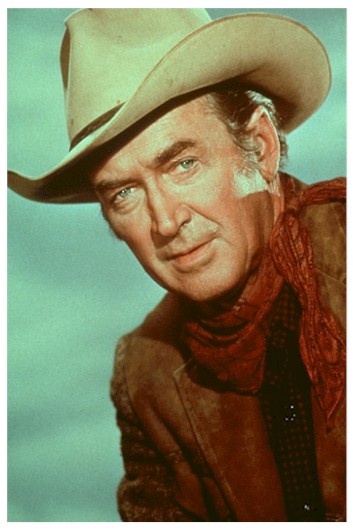
    James Stewart cowboy hat
    James Stewart
    Episode 9: Escape From Smoke Hills

    The Six Shooter.
    November 15, 1953.
    Program #9. NBC net.
    “Escape From Smoke Falls”.

    “A killer escapes from jail at Smoke Falls and shoots the sheriff. Two rivals both try to recapture him, with Britt Ponset riding with one of them. Jimmy Stewart, Frank Burt (writer, creator), Basil Adlam (music), Jack Johnstone (director), Jeanette Nolan, Forrest Lewis, Sam Edwards, Hal Gibney (announcer), Frank Gerstle, Robert Griffin.”

  • The Six Shooter Episode 8: “The Capture Of Stacy Gault”

    James Stewart cowboy hat
    James Stewart
    Episode 8: The Capture of Stacy Gault

    The Six Shooter.
    November 8, 1953.
    Program #8. NBC net.
    “The Capture Of Stacy Gault”.

    “Bank robber Stacy Galt is coming to Elk Point, and Britt Ponset is the only man left in town to face him. After a big meal, into the hotel walks Stacy Gault, looking for a room for the night. Jimmy Stewart, Basil Adlam (music), Jack Johnstone (director), Frank Burt (creator, writer), Eleanor Audley, Parley Baer, Hal Gibney (announcer), Barney Phillips, Forrest Lewis.”

  • The Six Shooter Episode 7: Ben Scofield

    James Stewart cowboy hat
    James Stewart
    Episode 7: Ben Scofield

    The Six Shooter.
    November 1, 1953.
    Program #7. NBC net.
    “Ben Scofield”.

    Britt forces the sheriff to go after a robber, even though the wounded crook may be the sheriff’s son. Jimmy Stewart, Jack Johnstone (director), Basil Adlam (music), Parley Baer, Herb Vigran, William Conrad, Frank Burt (writer, creator), Bert Holland, Hal Gibney (announcer).

  • The Six Shooter episode 6: Red Lawson’s Revenge

    James Stewart cowboy hat
    James Stewart
    Episode 6 Red Lawson’s Revenge

    The Six Shooter.
    October 25, 1953.
    Program #6. NBC net.
    “Red Lawson’s Revenge”.

    “Red Lawson has announced that he’s going to kill Britt’s friend Dan to get revenge for the death of his brother, four years previously. Frank Burt (creator), Les Crutchfield (writer), Shirley Mitchell, Barney Phillips, Hal Gibney (announcer), Jimmy Stewart, Basil Adlam (music), Leone LeDoux, Paul Richards, Hal Gibney (announcer).”