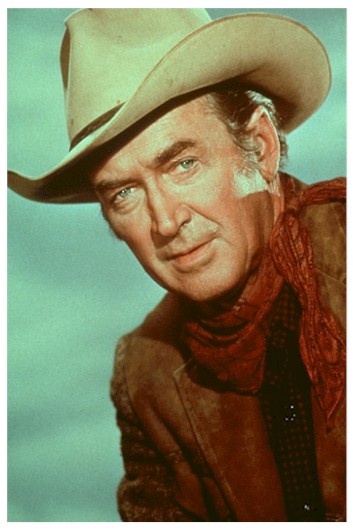
A lifetime ago I worked as a “student employee” as an undergrad. I was helping out the “system administration” folks – and ended up doing low level “desktop support” for faculty members.
random thought: I remember running the big ol’ suit case size “VHS video” camera when they gave a presentation about this new “internet” thing that the college was joining. That was “pre – world wide web” and you needed to use “command line” utilities to move around.
Thinking back to that presentation – the presenter was talking about using FTP and email (again, there was an “Internet” before there was the “world wide web”). One of the sites they talked about was in London (England) and you could download the complete works of Shakespeare!
Needless to say, I was impressed – but at that time the “general public” didn’t have access to the Internet. Only military bases and academic institutions were granted access – but the network was growing.
As I remember the debate – the folks running “academic institutions” seemed to think that if the Internet was opened up to the “general public” it would be overrun by advertisers/porn/spam – and of course they were correct. BUT what really caused the Internet to explode was making it “easy to use” for non-computer experts – i.e. the “world wide web.”
Hamlet and John Wayne
ANYWAY – one of the “faculty members” whose office computer I visited way-back-when was in the “theater” department. He had pictures of Hamlet AND John Wayne on his wall.
I had read Hamlet (for the first time) when I was in the Army, and grew up a John Wayne fan – so I asked him about the pictures. Obviously the Prof new much more about both than I did at the time – as I remember it he said something like “Shakespeare is a lot more ‘rough and tumble’ than you might think” – and also John Wayne more complex.
Fast forward a lifetime of study — and Mr Shakespeare and John Wayne were both working within “frameworks” catering to an audience. Mr Shakespeare wanted folks to buy tickets to performances of his plays, and Mr Wayne wanted folks to buy tickets to watch his movies.
BOTH were working in “genres.” John Wayne is most remembered for his work in “westerns” but he made a lot of “war” movies and a handful of “detective” movies – e.g. 184 credits listed on IMDB.
random thought: the joke was that John Wayne played the same character in every movie – i.e. “John Wayne” – which is a little unfair, but “funny because of the truth involved.” Mr Wayne’s Academy Award winning performance was playing a very NOT “John Wayne” roll – Rooster Cogburn in “True Grit” (1969)
random thought part 2: at the moment I can only think of 2 “fictional John Wayne character names” – Ethan Edwards in “The Searchers”(1956) and Rooster Cogburn – illustrating that “John Wayne” was what audiences paid to see … of course he also played Davy Crockett in “The Alamo” (1960) and Ghengis Khan in “The Conqueror” (1956) — yes, that was John Wayne as the Great Khan – mid-western drawl and all (not one of his better movies)
The “genres” Mr Shakespeare was dealing with were PRIMARILY designed to attract an audience. e.g. early on the audience would have gone to a “comedy”/”tragedy” or a “history” play not specifically a play by “William Shakespeare”
The super short “intro to Shakespeare” class would point out that what distinguished “comedies” and “tragedies” was the ending of the play – a comedy would end at the altar (folks getting married) and the tragedy would end at the crypt (folks dead).
The “histories” were similar to what we expect from modern “biopics” – they covered “themes” but weren’t always exactly “true.” More “based on a true event” than “actually true.” Again, Mr. Shakespeare was writing for an AUDIENCE – not pushing any agenda (except maybe “sell tickets”).
Go beyond the “intro” level and Mr Shakespeare’s comedies changed over the course of his career. The “early comedies” might have a “fantasy” aspect (e.g. “A Midsummer Night’s Dream” – the “lovers” go into the forest, things get weird, but are sorted out for a happy resolution in the morning). The “late romances” would have “fantasy” aspects core to the story (e.g. “The Tempest” – Prospero is literally a “wizard” with a “spirit servant” – but things also happily sort themselves out by the end).
The “entertainment industry” of the Elizabethan era being what it was – Mr Shakespeare wouldn’t have been able to remain a going concern without “patrons” backing his work. i.e. there was no “long tail” market – no “sub rights” to sell.
I’ve never seen an in depth analysis or a “profit and loss” statement from Shakespeare’s time — I don’t think the “patrons” expected to get a return on their investment OTHER than good seats at play performances. The fact that Mr Shakespeare “retired” at 47 implies the plays were commercially successful (and he died at 52).
random thought: the death of cause of death for Mr. Shakespeare is still a mystery. There are theories that he died after a drunken binge, that he had syphilis, or he might have been murdered! BUT it was 1616, who knows …
the “Western” …
ANYWAY – someone (recently) came up with a “greatest western movies” of all time type list. All such lists tend to be a little “arbitrary” – but also tend to be “interesting.” The list itself wasn’t what caught my attention – i.e. just what makes a “western” a “western?”
When Mr Shakespeare died, “working in the entertainment industry” wasn’t a highly esteemed profession. When he died the funeral was on a “wealthy local retiree” not “celebrity.” Literary immortality for Mr Shakespeare happened AFTER his death when his friends and admirers collected his works for publication.
Remember that “movable type printing” was perfected 150 years or so earlier – so it was an established technology but more importantly there was a growing market for “printed books.”
What does that have to do with “westerns?” Well, multiple zeitgeists probably collided in the last half of the 19th Century – the industrial revolution increased city populations, gave folks more “free time”, and increased disposable/discretionary income (as opposed to agricultural work).
Combine that with “public education” – and you have what the corporate types would call a “growing market segment” – i.e. folks with money in their pocket looking for something to buy.
Random thought: ANOTHER “old prof” back in the day liked to point out that the “printing press” had a lot of unintended consequences. Their theory was that people stopped “sitting around the fire” telling stories because they had “books” that they could go off and read by themselves – I think the point was that “humans are natural storytellers” or something BUT “fear of public speaking” is always high on the list of “common phobias.”
random thought part 2: I don’t think people fear “public speaking” what they fear is “being embarrassed in public” – e.g. a certain amount of “stage fright” is kinda required, if the speaker isn’t a LITTLE worried then they will be exceptionally boring – as everyone that has had to listen to “boring speaker” drone on, and on, and on understands … BUT “boring” might come from arrogance OR lack of preparation – neither of which is predestined
SO “lower cost printing” meets “public demand” and the “pulp magazines” were born. The “pulp” part was a reference to the low quality paper used in the printing process – and the content tended to be of similar quality.
Now, “sex” and “violence” are part of human history — just having “sex and violence” in a book doesn’t make it “low quality”, it obviously depends on how the “sex and violence” is presented.
If you have some form of “action/consequence” then you MIGHT have a work of “high literary quality” BUT if the work is just “descriptions of explicit sex” polite society might call that “pornography.”
Same idea with “violence” – and I will wave at the trend of “violence porn” without comment beyond it might have some sex/nudity, but is just “pointless violence.”
I seem to remember hearing that Sam Peckinpah got criticized for showing “blood” in “The Wild Bunch” back in 1969 (which really just looks like ketchup on shirts) – umm, slippery slope and all that …
MEANWHILE …
“Pulp” magazines needed content and humans have always loved reading/haring about “exotic locations” so the “American West” after the Civil War was the source of a LOT of “colorful pseudo historical” characters.
William “Buffalo Bill” Cody and his “Wild West Show” helped create the specific “idea” of the “western” as a distinct genre. But Buffalo Bill serves as an example of the trend – not the source.
The world’s first “modern celebrity” was Samuel Clemens (Mark Twain) – the quintessential storyteller, both in print and on stage. Mr Clemens was more famous as “travel writer” during his lifetime than for “Huckleberry Fin” – “Roughing It” (published in 1872) was his semi-autobiographical contribution to “books about the west.”
Again, Mark Twain is an example not the source. The IDEA of a “frontier” separating “polite society” from the “unknown” is (probably) as old as human beings.
Even the “idea” of “the west” as being “unknown”/terra incognita goes back to “ancient times.” My pet theory is that this “west” as “frontier” involves the rising of the sun (in the “east”) and the setting of the sun (in the “west”) – but I’m just guessing …
The specific “western frontier” for the United States is obviously based on the fact the the original “13 Colonies” were on the eastern coast of the continent.
Expansion “west” was initially a slow process for “American History class” reasons. This is where we start bumping up against the problems defining the “western” genre.
Stories set in “Colonial Times”, “Pioneer Times” (the initial slow move west), and the Civil War period, PROBABLY don’t fit into a narrow definition of “the western.”
e.g. at one point Ohio was the “western frontier” – and having grown up and living in Ohio I can say we have a lot of “history” – the story of “Blue Jacket” and the Shawnee people is historically interesting – I’m just not calling it a “western” …
Pop Culture
The U.S. Bureau of the Census declared the “frontier” closed in 1890 (as in “no longer a discernible demarcation between frontier and settlement”).
Not surprisingly, the “western” in pop culture became popular AFTER the frontier closed. Again, folks looking for “entertainment” tend to look to the “unknown”/unusual – i.e. if you were living on the “frontier” you probably didn’t have much interest in reading first hand accounts of “frontier life” – even if they were available.
The “American Wild West” period is usually dated from “after the Civil War” (1865ish) to the turn of the century.
Zane Grey published his first novel in 1903. Mr. Grey’s name is synonymous with “western” – but again, SOME of his stories could be more accurately called “frontier”/pioneer stories.
“Max Brand” however was a pen name for Frederick Schiller Faust. Mr Faust wrote 300+ novels under various pen names – “Max Brand” was pure “western” genre written in a “pulp” fashion.
Then Louis L’Amour (200 million books sold) started writing when the “western” was a fully formed pop culture concept. Mr L’Amour preferred saying he wrote “western stories” not “westerns” — which brings us back to the initial problem …
Radio, Movies, and TV …
All of this talk about “literary genres” is nice – but it is all precursor to the TRULY mass media of modern times.
The western quickly found its way to the silver screen. The “B” western being a great example of “pulp western” plots with visuals.
Radio brought the western into folks homes – “Return with us now to those thrilling days of yesteryear …” – e.g. both the Lone Ranger and Gunsmoke started out as “radio shows”
When sound and pictures came into folks homes – so did the western. With the 1950s being the “golden age” of TV westerns — which is another subject …
Two World Wars and millions of Americans going overseas would change American society, and the “western” changed with it.
The movies labelled “spaghetti westerns” (in the late 1960’s and 1970s) were truly “multinational” projects – the “man with no name” trilogy being a good example – filmed in Spain, Italian director, American actors. The legend is that the multinational cast members would say their lines in their native language, and then be dubbed over as needed – which gives the films a VERY distinctive look …
random thought: The fact the several of Akira Kurosawa’s samurai movies were made into “westerns” illustrates both “underlying themes” AND the versatility of the “western” as a genre – both “The Magnificent Seven” and “A Fistful of Dollars” are based on Kurosawa movies (though Sergio Leone denied the connection).
Did the western die?
There was almost a decade gap between “The Outlaw Jose Wales” (1976) and “Pale Rider”/”Silverado”/”Rustlers’ Rhapsody” (all 1985).
Did the “western” die? Well, if you define “western” as a story with “cowboy hats and horses in a specific time period” then the answer is “maybe.”
From a “movie business” point of view – when a large % of TV shows were westerns and multiple “westerns” would be released each year then the “cost of production” for a “western” wasn’t particularly high compared to a “non western.”
i.e. a lot of sets could be reused and “talent” was available – so “movie company” could “send the crew” out to the “back lot” and make a movie on time and under budget.
BUT if everything has to be built from scratch and talent selected/hired – well, things get expensive/”unprofitable” fast.
SO it would be more accurate to say that the “western” fell out of fashion much more than “died.”
Some other movie franchises were also wildly popular at the time (“Star Wars” 1977, “Empire Strikes Back” 1980, and “Return of the Jedi” 1983). “Raiders of the Lost Arc” (1981) has a LOT of “western” elements but isn’t a “western.”
The 1980’s “action movie” isn’t TOO far removed from “pulp western” plots. Clint Eastwood’s career is intertwined with the “western” — I like to point out that “Dirty” Harry Callahan is basically the “man with no name” as “Police Detective” and a bureaucracy …
the stories we tell …
All of which means the “western” as a genre is a little hard to define – AND that it isn’t going away anytime soon because it is part of the “American myth” and “foundation legend”
I should point out the difference between “myth” (completely fabricated) and “legend” (there is a “historic source” but stuff has been added over the years).
e.g. the story of King Arthur and the Knights of the Round Table is the stuff of “legend” – i.e. there PROBABLY was a historic source for “Arthur” but the story as it is told today says more about the people telling the story than it does about that historic figure.
e.g. there is apparently no historic basis for “Robin Hood and his Merry Men” – but it does help explain how the U.K. became the U.K. so we could call it a “modern myth”
The “western” is both “myth” AND “legend” —
The “myth” might sound like “plucky pioneers endured hardship, overcame nature, with the intent of building a nation” — which isn’t totally “false” but if you had interviewed the folks “going west” they were PROBABLY doing it MOSTLY out of their own self-interest not pursuing some grand ideal of a new nation.
The number of “western legends” is legion – Davy Crockett swinging his rifle (“Betsy”) on the parapets of the Alamo immediately comes to mind.
ANY “quick draw gun fight” story is pure “legend” (e.g. Wyatt Earp’s advice for a gun fight was: “take your time and hit what you are aiming at” – which is much easier said than done …).
Billy the Kid as “frontier Robin Hood” had as much truth in it as “Robin Hood.” Henry McCarty was a real person – but more thug than folk hero. fwiw: he pops up in the (I enjoyed it) movie “Old Henry” (2021) –
while I’m at it, Wyatt Earp was an interesting individual – but nothing like the classic TV series “The Life and Legend of Wyatt Earp” — again, THAT story says much more about 1950’s America than the real live Wyatt Earp …
I could go on, but won’t 😉
find me on linkedin